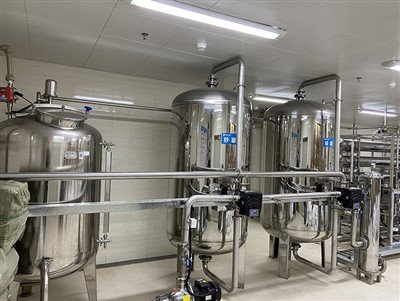
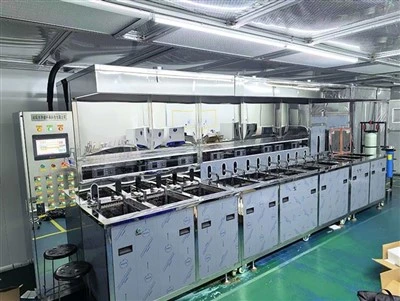
Ultrasonic waves propagate in liquids, causing the liquid and the cleaning tank to vibrate together at the ultrasonic frequency. Each vibration has its own natural frequency, which is the sound wave frequency, resulting in a buzzing sound. With the continuous development of the cleaning industry, more and more industries and enterprises are using ultrasonic cleaning machines.
The advantages of ultrasonic cleaning machines are: excellent cleaning effect and simple operation. Ultrasonic cleaning machines are widely used in surface coating, machinery, electronics, medical, semiconductor, watch and jewelry, optics, and textile printing and dyeing industries.
The vibration speed of the elastic vibrating body of the ultrasonic motor and the method of energy transfer through friction determine that it is a low-speed motor. At the same time, its energy density is about 5 to 10 times that of an electromagnetic motor, allowing it to obtain high torque at low speeds without a reduction gear, directly driving the actuator. However, the high energy density also leads to overheating inside the ultrasonic motor under poor heat dissipation conditions, directly affecting performance stability.
Because ultrasonic cleaning machines are used in various environments, noise control requires careful attention. Therefore, noise levels related to heat dissipation must not be too high. As we all know, when using air cooling, the fan speed increases as heat accumulates, resulting in increased noise. Additionally, fan cooling tends to accumulate dust, affecting the internal environment.
So, is there a better cooling method? The answer is liquid cooling. Among various cooling methods, liquid cooling is beginning to emerge. Its excellent heat dissipation, quiet operation, and eco-friendly, safe, and stable performance have significantly changed traditional cooling methods. Liquid cooling is already being used in many fields, such as new energy, LEDs, and lasers, accelerating its development. Ultrasonic cleaning machines are no exception, with many companies already adopting this cooling method. In the future, even more equipment will incorporate liquid cooling.