


Deionized (DI) Water Systems for Industrial & Laboratory Applications
Product Overview
Deionized (DI) water systems eliminate dissolved mineral ions—including sodium, calcium, iron, chloride, nitrate, and sulfate—from source water through synthetic ion-exchange resins or continuous electrodeionization (EDI) modules.
Output Water Characteristics
• Resistivity: Up to 18.2 MΩ·cm at 25 °C reference temperature (Ultrapure Grade)
• Conductivity: As low as 0.055 μS/cm
• Operational Value: Prevents scale buildup, piping corrosion, and chemical bath contamination in precision manufacturing processes.
-
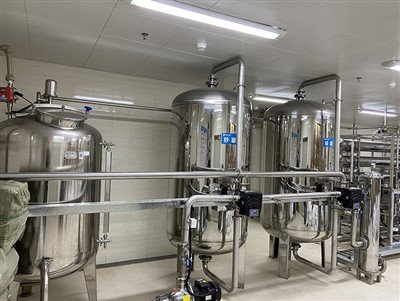
![Industrial Deionized Water System]() Industrial Deionized Water SystemProcessing technology: reverse osmosis(EDI optional)
Components brand: DOW membrane & Ionpure EDI & CNP pump
Membrane maintenance: CIP cleaning system
RO design basis: USA DOW... -
![Di Water Maker for Surface Cleaning]() Di Water Maker for Surface CleaningProcessing technology: double pass RO + EDI
RO membrane: USA DOW
EDI module: USA Ionpure
Membrane maintenance: CIP cleaning system
RO design basis: USA DOW software --... -
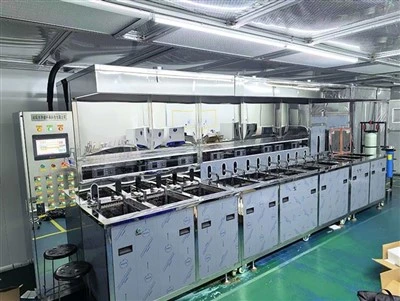
![Deionized Water Generator Ultrasonic Cleaner]() Deionized Water Generator Ultrasonic CleanerApplication: Ultrasonic cleaner
Feed water: municipal tap water or underground water
Processing technology: Pretreatment + double pass RO + EDI +
RO membrane: DOW or... -
![Deionized Water Machine Beverage Prodction]() Deionized Water Machine Beverage ProdctionApplication: Polysilicon industry
Key tech: reverse osmosis + EDI + PMB
Membrane: DOW or VONTRON RO membrane
EDI module: Ionpure
System design: USA DOW software – WAVE... -
![Deionized Water Filter System Radiator Coolant]() Deionized Water Filter System Radiator CoolantProcessing technology: reverse osmosis & EDI
RO membrane: USA DOW
EDI module: Ionpure
Membrane maintenance: CIP cleaning system
RO design basis: USA DOW software --... -
![Di Water Machine for Electroplating]() Di Water Machine for ElectroplatingProcessing technology: reverse osmosis
Components brand: DOW membrane & Ionpure EDI & CNP pump
Membrane maintenance: CIP cleaning system
RO design basis: USA DOW software --...


System Architecture & Configuration Types
|
System Architecture |
Process Mechanism |
Target Industrial Applications |
|
Dual-Bed DI (SAC / SBA) |
Separate Strong Acid Cation and Strong Base Anion vessels for high total dissolved solids (TDS) reduction. |
Metal finishing pre-treatment, process cooling, and boiler feed water. |
|
Mixed-Bed DI |
Intermixed cation and anion resins in a single pressure vessel for final ionic polishing. |
Semiconductor wafer rinsing, analytical laboratory supply, and pure chemical bath makeup. |
|
RO + EDI System |
Reverse Osmosis pre-concentration combined with Continuous Electrodeionization. |
Continuous 15–18 MΩ·cm water supply without onsite chemical regeneration handling. |
Technical Specifications
|
Parameter |
Laboratory Grade |
Industrial Process Grade |
High-Purity / Electronics Grade |
|
Flow Rate Range |
50–500 L/h |
1,000–50,000 L/h |
10–100+ m³/h (Custom skids) |
|
Target Resistivity |
1–15 MΩ·cm |
0.2–5 MΩ·cm |
15–18.2 MΩ·cm |
|
Target Conductivity |
0.067–1.0 μS/cm |
0.2–5.0 μS/cm |
≤ 0.055 μS/cm |
|
Required Feed Water |
Potable tap water (TDS < 300 ppm) |
Softened water or RO permeate |
RO Permeate (TDS < 10 ppm, TOC < 0.5 ppm) |
|
Operation Cycle |
Batch exchange cartridges |
In-situ chemical regeneration / Continuous EDI |
Continuous dual-train configuration |
|
Piping & Valve Material |
SCH80 UPVC / PVDF |
UPVC / 304 Stainless Steel |
Automated orbital-welded 316L SS / PVDF |
|
Control Architecture |
Digital microprocessor |
Siemens S7-1200 / 1500 PLC |
Siemens / Allen-Bradley PLC with SCADA |
Primary Applications
Electronics & Semiconductor Assembly:
Final rinse water for printed circuit boards (PCBs), micro-chips, and optical displays to prevent ionic residue defects.
01
Laboratory & Analytical Testing:
Reagent preparation, glassware washer final rinse, and HPLC mobile phase dilution.
02
Automotive Coating (CED / E-Coat):
Cathodic Electrodeposition bath makeup and post-paint dip tank maintenance.
03
Electroplating & Surface Finishing:
Bath volume makeup water to maintain chemical equilibrium and finish uniformity.
04
Power & Steam Generation:
High-pressure boiler feed water pre-treatment to eliminate heat exchanger scaling and corrosion.
05

Fabrication & Quality Verification
• Pressure Vessel Compliance: Fabricated and hydrostatic pressure-tested strictly to ASME Section VIII / CE-PED standards with stamped vessel certification available upon request.
• High-Purity Piping Fabrication: Automatic orbital welding for all 316L stainless steel lines under continuous inert gas purging, eliminating internal bead oxidation and bacterial dead legs.
• 100% Factory Acceptance Testing (FAT): Hydrostatic pressure test at 1.5× design operating pressure, 24-hour wet operational verification, and PLC logic validation prior to shipment.
• Industrial Communication Protocols: Native integration support for Siemens Profinet, Modbus RTU, and Allen-Bradley EtherNet/IP systems.
Process Reliability Upgrades
• Redundant Dual-Train Setup: Dual skid configuration ensuring uninterrupted pure water supply during off-line resin regeneration or system maintenance.
• Automated Water Quality Protection: Continuous inline conductivity/resistivity sensors coupled with automatic multi-port divert valves to reject off-spec water automatically.
Consumables & Maintenance Schedule
|
Component |
Service / Replacement Interval |
Maintenance Action / Operational Criteria |
|
Sediment Filter Cartridges |
1–3 Months |
Replace 5 μm PP melt-blown cartridges when differential pressure exceeds 1.0 bar (14.5 psi). |
|
Dual-Bed Resin |
12–24 Months |
Perform in-situ regeneration using commercial-grade HCl (Acid) and NaOH (Caustic) solutions. |
|
Mixed-Bed Polishing Resin |
Capacity dependent |
Replace virgin resin bed or send for off-site regeneration when outlet resistivity drops below process limit. |
|
EDI Module |
3–5 Years |
Maintain strict feed water pretreatment (Hardness < 0.1 ppm, Total Chlorine < 0.05 ppm, TOC < 0.5 ppm). |
Frequently Asked Questions

Request a Customized Technical Quotation
To receive an accurate sizing calculation, equipment layout, and formal commercial proposal, please submit your baseline process parameters:
Required Water Quality Target: (e.g., 10 MΩ·cm, 18.2 MΩ·cm, or < 0.1 μS/cm)
Design Flow Rate: (e.g., 5 m³/h, 50 GPM, or 2,000 L/day)
Feed Water Source & Analysis: (Tap water, well water, or RO permeate; provide TDS/Conductivity data if available)
Duty Cycle Requirements: (Intermittent process batching or 24/7 continuous process feed)
System Hardware Preferences: (e.g., Siemens PLC, UPVC vs 316L SS piping, skid enclosure requirements)
Engineering Technical Support: sales@jkontech.com
Direct Line: +8615338804118
Manufacturing Plant: Shanghenglang Industrial park, Daloang Street, Longhua District, Shenzhen, China
As one of the most professional deionized water system manufacturers and suppliers in China, we're featured by quality products and good service. Please rest assured to buy customized deionized water system made in China here from our factory. Contact us for more details.
deionized water system, deionized water treatment equipment, Di Water Machine For ElectroplatingPopular Products
RO membrane: USA DOW
Membrane maintenance: CIP cleaning...

Membrane: DOW or VONTRON RO membrane
Pump: CNP
System design: USA DOW...

RO membrane: USA DOW
Membrane maintenance: CIP cleaning...

RO membrane: USA DOW or Chinese VONTRON
RO design basis: USA...

RO membrane: USA DOW
EDI module: USA Ionpure...
Frequency Range: 80–200 kHz
Application Industries:...