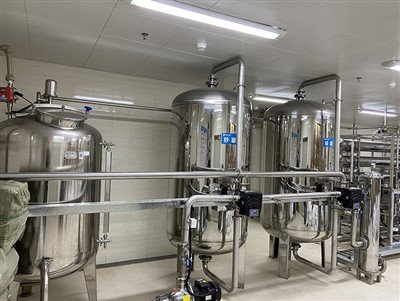
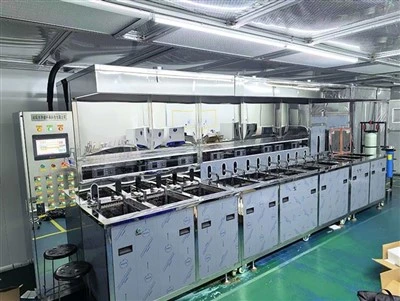
Ultrasonic cleaners utilize the cavitation effect, instantaneous velocity effect, and direct current effect of ultrasound in liquids to directly and indirectly affect liquids and waste. This disperses, emulsifies, and removes the waste layer to achieve the purpose of cleaning. Currently, cavitation effect and dual-flow effect are more commonly used in ultrasonic cleaners.
Cavitation Effect: The cavitation effect is the high-frequency scattering of ultrasound waves into the liquid at approximately 20,000 times per second of compression and decompression. During decompression, a vacuum bubble group is formed in the liquid. During compression, the vacuum bubble group is broken by pressure, generating a strong impact force, thereby removing the dirt from the surface of the object being cleaned, achieving high-precision cleaning.
Ultrasonic cleaners suppress the cavitation effect, reducing the cleaning rate.
Direct Flow Effect: The flow state created by ultrasound waves along the direction of the sound wave in the liquid is called direct flow. When the ultrasonic strength is 0.5 W/cm², a straight-through flow is visible to the human eye, creating fluidity perpendicular to the vibrating plate, with a flow velocity of approximately 10 cm/s. This straight-through flow agitates the oil-free dirt on the surface of the object being cleaned, and the cleaning solution on the dirt surface also generates thermal convection. The dissolved waste solution mixes with fresh water, accelerating dissolution and playing a crucial role in waste removal.
Instantaneous velocity: The instantaneous velocity generated by the liquid particles. At this stage, cleaning mainly relies on the instantaneous velocity collision of the liquid particles with the ultrasonic waves to perform ultra-precise cleaning of the waste.
Composition of the ultrasonic cleaner: The ultrasonic cleaner mainly consists of two parts: the ultrasonic cleaner itself and the ultrasonic generator. The ultrasonic cleaner is made of durable, corrosion-resistant stainless steel, with an ultrasonic transducer at the bottom. The ultrasonic generator generates high frequency and high voltage, which is transmitted to the transducer via a wire connection. The transducer and the vibrating plate together create high-frequency resonance, causing the solvent in the cleaning tank to be cleaned by the ultrasonic waves.