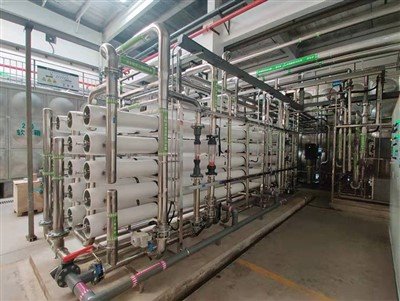
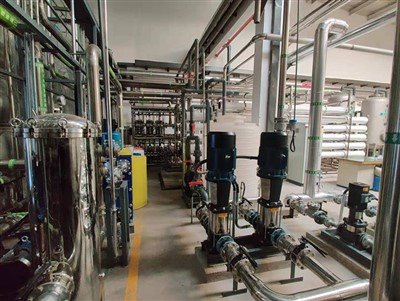
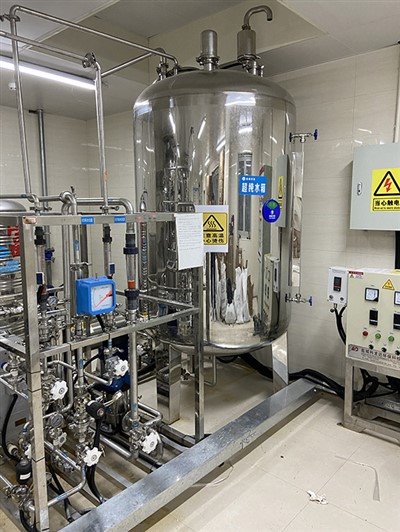
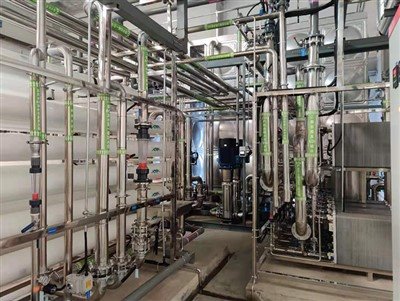
The Demineralised Water Plant for Dyeing and Printing is specially designed to provide high-purity water for textile processing applications. In dyeing and printing operations, water quality directly affects color consistency, fabric appearance, chemical performance, and production efficiency. By removing dissolved salts, hardness, and mineral impurities, the system ensures stable process water for high-quality textile production.
This plant is widely used in textile mills, dyeing houses, garment processing units, and fabric printing factories where mineral-free water is essential for achieving uniform shades and reducing production defects.
Why Demineralised Water is Important in Dyeing and Printing
Ordinary water often contains calcium, magnesium, iron, and other dissolved minerals that can interfere with dyes, chemicals, and finishing agents. Using demineralised water helps:
- Improve dye absorption and color uniformity
- Prevent shade variation and patchy dyeing
- Reduce scaling in pipelines, boilers, and equipment
- Improve the effectiveness of chemicals and auxiliaries
- Minimize fabric stains and unwanted residues
- Ensure consistent printing quality
Product Overview
The Demineralised Water Plant is designed to produce low-mineral, low-conductivity water for textile dyeing and printing applications. The system removes dissolved salts, hardness, and other mineral impurities that can interfere with dyes, chemicals, and fabric finishing processes. It ensures consistent water quality, improving dye fixation, color uniformity, and overall production efficiency in textile mills.
Typical Process Configuration
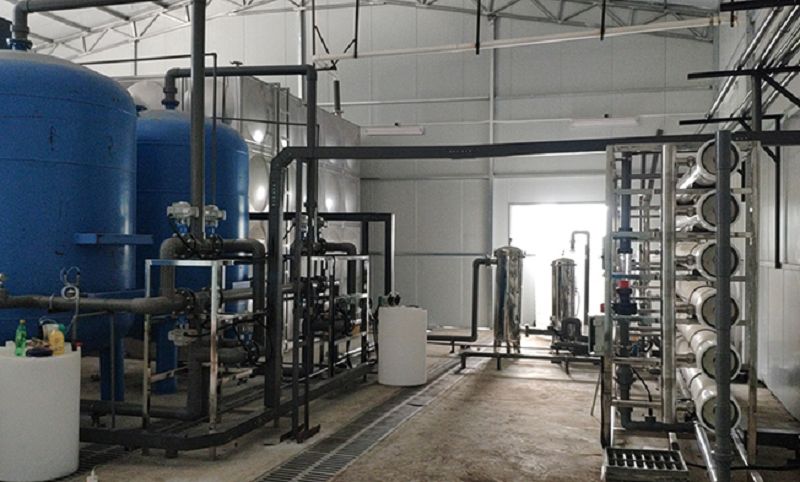
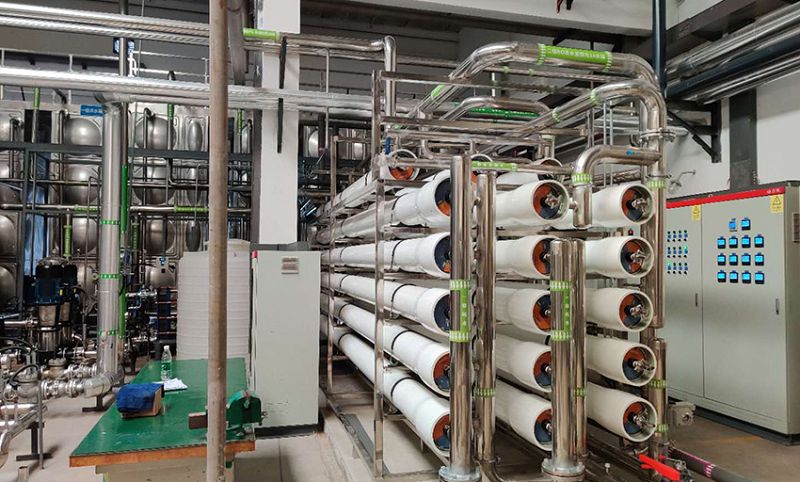
Raw Water Tank → Feed Pump → Multimedia Sand Filter → Activated Carbon Filter → Water Softener (optional) → Cartridge Filter → Reverse Osmosis System → Demineralisation Unit (Cation + Anion or Mixed Bed) → DM Water Storage Tank → Distribution Pump
Technical Specifications
|
Item |
Specification |
|
System Type |
RO + Demineralisation (Ion Exchange) |
|
Feed Water Source |
Municipal water / Groundwater / Surface water |
|
Production Capacity |
1–100 m³/hr (customizable) |
|
Operating Pressure |
0.2 – 0.6 MPa (RO stage) |
|
Power Supply |
380V / 50Hz / 3 Phase (customizable) |
|
Operating Temperature |
5 – 45°C |
|
System Recovery Rate |
60 – 75% (depending on feed water quality) |
Output Water Quality
|
Parameter |
Typical Value |
|
Conductivity |
≤ 5 µS/cm |
|
Total Dissolved Solids (TDS) |
≤ 5 ppm |
|
Hardness |
≤ 0.01 mmol/L |
|
Silica |
≤ 0.05 ppm |
|
Iron |
≤ 0.01 ppm |
|
Chloride |
Ultra-low |
Final water quality may vary depending on feed water conditions.
System Components
Pretreatment Section
- Raw water storage tank
- Feed water pump
- Multimedia sand filter
- Activated carbon filter
- Water softener (optional)
- Cartridge filter (5 µm)
Main Purification Section
- Reverse osmosis membranes
- High-pressure pump
- RO membrane housings
Demineralisation Section
- Cation exchange vessel
- Anion exchange vessel
- Mixed-bed polishing unit (optional)
Post-Treatment & Storage
- DM water storage tank
- Distribution pump
- Online conductivity meter
Control System
- Automatic valve operation
- PLC control system (optional)
- Online conductivity monitoring
- Pressure gauges and flow meters
- Automatic flushing and protection functions
Materials of Construction
|
Component |
Material |
|
Filter Vessels |
FRP / Carbon Steel / Stainless Steel |
|
Piping |
UPVC / SS304 / SS316 |
|
RO Membrane Housing |
FRP / SS |
|
Frame |
Painted Carbon Steel or Stainless Steel |
Applications
- Textile dyeing processes
- Fabric printing operations
- Chemical preparation for textile processing
- Boiler feed water for textile plants
- Fabric washing and rinsing lines
Advantages
- Stable water quality for dyeing processes
- Improved color consistency and dye uptake
- Reduced scaling in equipment and pipelines
- Lower chemical consumption
- Extended equipment lifespan
- Modular design for easy expansion
Installation Requirements
- Stable power supply
- Clean installation area with drainage
- Adequate feed water pressure
- Access for maintenance and resin replacement
Optional Upgrades
- Double-pass RO system
- Mixed-bed polishing unit
- UV sterilization system
- Remote monitoring system
- Fully automatic PLC + touchscreen control
Successful Cases

Our Service
a.We provide full technical support and after equipment installation.
b.We help to train operator of the system. And detailed operating manual is provided.
c.7*24 hours phone assistance on technical support.
d.We provide consumable and spare parts in the long-term for cost price.
Hot Tags: demineralised water plant for dyeing and printing, China demineralised water plant for dyeing and printing manufacturers, suppliers, factory, demin water equipment, demin water plant, Demineralised Water Plant For Dyeing And Printing, industrial dm plant, RO DM Plant System, ro dm water equipment