A demin water system for circuit boards is a water purification system that removes dissolved minerals and ionic contaminants from water to produce high-purity water used in printed circuit board (PCB) manufacturing and cleaning.
Simple Definition
A demin water system removes minerals such as calcium, magnesium, sodium, chloride, and sulfate using reverse osmosis (RO) and deionization (DI) or ion-exchange resins, producing low-conductivity water that does not leave residues on electronic components.
Why Circuit Board Manufacturing Needs Demin Water
Circuit boards are extremely sensitive to contamination. If regular tap water is used during cleaning or rinsing, it may leave conductive residues or mineral deposits, which can cause serious problems.
Using DM water helps to:
- Prevent short circuits caused by ionic contamination
- Avoid corrosion of copper traces and electronic components
- Ensure residue-free rinsing of PCBs
- Improve product reliability and electrical performance
- Maintain clean surfaces during manufacturing
Even small mineral residues can affect circuit performance, especially in high-precision electronics.
How to Design a Demin Water System For Circuit Boards
To design a PCB deionized water system, start from the required water quality, production flow, and application point in the PCB process. PCB cleaning water usually needs to be low in ions, low in particles, and stable in conductivity/resistivity so it does not leave conductive residue on boards.
1. Define the application first
Different PCB processes need different water quality.
Common uses:
- Pre-cleaning / general rinsing
- Final rinse after chemical cleaning
- Ultrasonic cleaning
- Surface treatment / coating line rinse
- High-reliability electronics cleaning
For final PCB rinsing, the water spec is usually much stricter than for general washing.
2. Confirm the target water quality
Set the design targets before choosing equipment.
Typical design items:
- Conductivity or resistivity
- TDS
- Silica
- Hardness
- Chloride / sulfate
- Particle level
- TOC if process is sensitive
- Bacteria / microbial control if stored in tank for long periods
A common practical target for PCB DI water is:
- Conductivity: below 1–5 µS/cm
- Or Resistivity: around 0.2–1.0 MΩ·cm or higher, depending on process
For higher-end electronics cleaning, the final rinse may require much higher resistivity.
3. Analyze the raw water
You need a raw water report before sizing the system.
Important parameters:
- Feed water source: municipal, well, surface water
- TDS
- Hardness
- Silica
- Chlorine / chloramine
- Iron / manganese
- pH
- SDI / turbidity
- Organic load
This determines pretreatment and operating cost.
4. Calculate required capacity
Size the system from actual demand, not just tank size.
Determine:
- Hourly flow needed for the rinse line
- Daily water demand
- Peak demand during simultaneous rinsing
- Recovery target
- Tank storage volume
A practical approach:
- Continuous process demand
- Plus 10–20% design margin
- Plus storage buffer for peak use
5. Choose the process configuration
For PCB cleaning, the most common design is:
Pretreatment → RO → DI or EDI → Polishing filter → Storage tank → Recirculation loop
Typical stages
A. Pretreatment
Protects RO membranes and stabilizes feed water.
Usually includes:
- Raw water tank if needed
- Booster pump
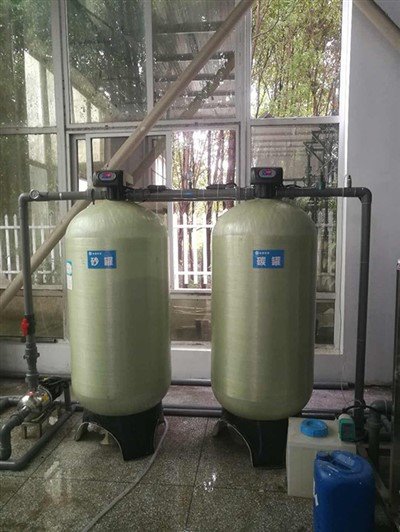
- Multimedia / sand filter
- Activated carbon filter for chlorine removal
- Water softener or antiscalant dosing if hardness is high
- 5 µm cartridge filter
B. Reverse Osmosis (RO)
RO removes most dissolved salts and organics.
Benefits:
- Removes 95–99% of dissolved ions
- Greatly reduces DI resin consumption
- Lowers operating cost
For industrial PCB systems, RO is usually essential.
C. DI or EDI polishing
After RO, use one of these:
- Mixed-bed DI
- Lower initial cost
- High final purity
- Good for small and medium systems
- Requires resin replacement/regeneration
EDI
- Continuous operation
- No chemical regeneration of resin beds
- Better for larger, stable-flow systems
- Higher initial cost
For many PCB factories:
- RO + mixed bed DI is common
- RO + EDI + mixed bed is used when higher purity and automation are needed
D. Final polishing
To protect the rinse process:
- 0.2–1 µm final filter
- Optional UV
- Optional final mixed-bed polisher for very high purity
6. Example of a standard Demin Water System For Circuit Boards
A typical design might be:
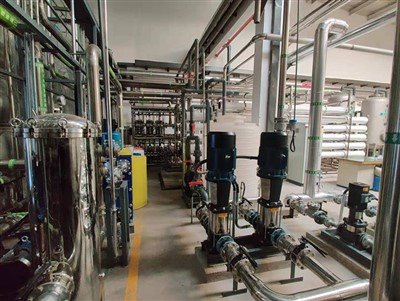
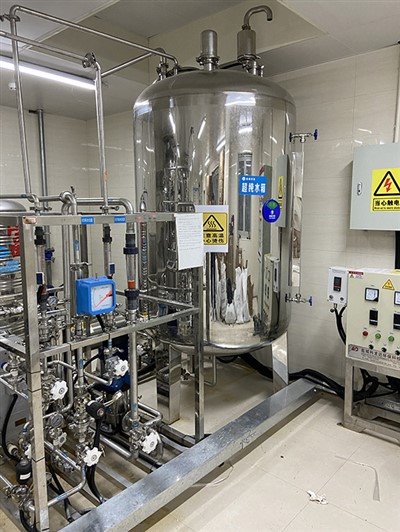
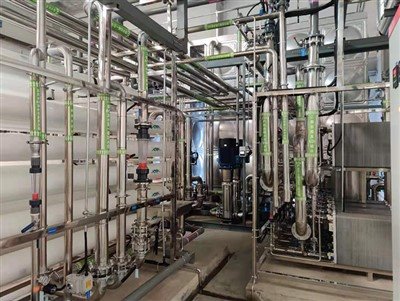
Raw water tank → booster pump → multimedia filter → activated carbon filter → softener → 5 µm filter → RO unit → RO permeate tank → mixed-bed DI → 0.2 µm final filter → DI water tank → recirculation pump → PCB rinse points
For higher-end production:
Pretreatment → double-pass RO → EDI → mixed-bed polishing → UV → 0.2 µm filter → loop distribution
If you want to design one accurately, gather these 6 items:
1.Required flow in m³/hr or m³/day
2.Raw water analysis: TDS, hardness, silica, chlorine, iron
3.Application: general rinse, final rinse, ultrasonic, high-reliability PCB
4.Target outlet quality: conductivity or resistivity
5.Need for storage/distribution loop or just local use
6.Operation mode: continuous or batch
If you give me those 6 items, I can lay out a practical Demin Water System For Circuit Boards configuration for you.
Successful Cases


Our Service
a.We provide full technical support and after equipment installation.
b.We help to train operator of the system. And detailed operating manual is provided.
c.7*24 hours phone assistance on technical support.
d.We provide consumable and spare parts in the long-term for cost price.
Hot Tags: demin water system for circuit boards, China demin water system for circuit boards manufacturers, suppliers, factory, demin water equipment, demin water generator, Demineralised Water Plant For Dyeing And Printing, industrial dm plant, ro dm equipment, RO DM Plant System