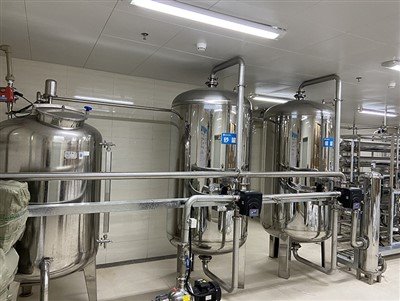
Pure water systems are mainly divided into reverse osmosis systems, ion exchange systems, electrodeionization (EDI) systems, and ultrafiltration systems. Different systems are suitable for laboratory, industrial, or household applications depending on their process and effluent quality.
Common types based on application and purification technology are as follows:
Reverse Osmosis (RO) System: Removes over 95% of ions, organic matter, bacteria, and particulate matter through semi-permeable membrane filtration, producing Grade III pure water (RO water). Widely used for basic laboratory cleaning, glassware rinsing, and as a pretreatment step for high-purity water.
Ion Exchange System: Utilizes functional ions on the resin to exchange with ions such as calcium, magnesium, and sodium in the water, effectively removing hardness ions and dissolved salts. Often used in the fine treatment stage to improve water purity.
Electrodeionization (EDI) System: Combines electrodialysis and ion exchange technologies, continuously removing ions from water under a direct current electric field. No chemical regeneration is required. It can stably produce Grade II pure water or even Grade I ultrapure water, suitable for high-standard industries such as electronics and pharmaceuticals.
Ultrafiltration systems use ultrafiltration membranes to remove large organic molecules, pyrogens, and microorganisms while retaining some minerals. They are commonly used in life science experiments for applications sensitive to RNase/DNase.