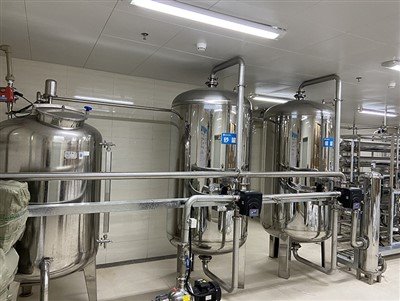
Pure water systems are an indispensable water treatment technology in modern industry, medicine, and scientific research. Their core objective is to remove impurities, ions, microorganisms, and other pollutants from water through multiple physical and chemical methods, ultimately obtaining high-purity water.
Technical Principles of Pure Water Systems
1. Reverse Osmosis (RO) Technology
Reverse osmosis is one of the core components of a pure water system. Its principle is based on the selective permeation of a semi-permeable membrane. Under high pressure, raw water is forced through the reverse osmosis membrane. Water molecules can pass through the tiny pores on the membrane, while dissolved salts, colloids, organic matter, and microorganisms are retained due to differences in volume or charge. The pore size of the reverse osmosis membrane is typically 0.1 nanometers, capable of removing over 90% of dissolved solids (TDS) and 99% of bacteria and viruses.
2. Electro-deionization (EDI) Technology
In ultrapure water production, EDI technology combines the principles of ion exchange and electrodialysis. By using modules filled with ion exchange resin and a DC electric field, residual ions in the water are selectively adsorbed and migrated to the concentrate chamber for discharge, thus avoiding the frequent regeneration problems of traditional ion exchange resins. EDI permeate has a resistivity of 15-18 MΩ·cm, making it suitable for industries with extremely high water quality requirements, such as semiconductors and photovoltaics.
3. Multi-stage Pretreatment and Post-treatment Pure water systems typically include multi-stage pretreatment (such as sand filtration, activated carbon adsorption, and softening) to protect the core membrane modules. Post-treatment may include ultraviolet (UV) sterilization, ultrafiltration (UF), or terminal polishing mixed bed to further ensure water quality.