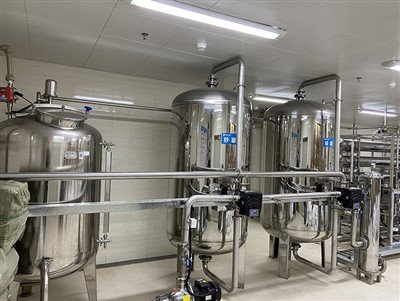
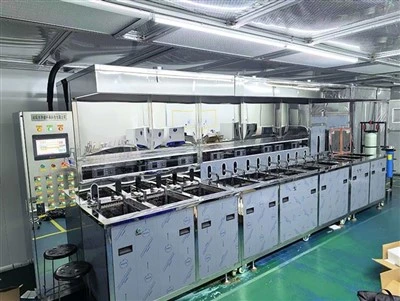
A pure water system removes impurities such as ions, organic matter, and microorganisms from water through multi-stage filtration and membrane separation technology. The core processes include pretreatment, reverse osmosis (RO), electrodeionization (EDI), and post-treatment, ultimately producing high-purity water.
Working Principle Breakdown:
Pretreatment Stage: Removes suspended solids, residual chlorine, calcium and magnesium ions from the raw water, protecting the core membrane components.
This mainly includes:
Quartz Sand Filter: Removes silt and particulate matter, reducing turbidity.
Activated Carbon Filter: Adsorbs organic matter, residual chlorine, and odors, preventing oxidative damage to the RO membrane.
Softener/Dosing System: Prevents calcium and magnesium scaling through ion exchange or scale inhibitors.
Security Filter (5μm): Intercepts fine particles, protecting the high-pressure pump and RO membrane.
Core Membrane Treatment Stage
Reverse Osmosis (RO) System: Under high pressure, water molecules are forced to pass through an RO membrane with a pore size of only 0.0001μm, retaining 95-99% of bacteria, viruses, heavy metals, salts, and other impurities. Single-stage RO can reduce conductivity to below 10μS/cm, while dual-stage RO further improves purity.
Electrodeionization (EDI) System: Combining ion exchange and electrodialysis, residual ions are continuously removed under an electric field, requiring no chemical regeneration, resulting in stable and environmentally friendly water production.
Post-Treatment and Disinfection
Ultraviolet Sterilizer (185nm + 254nm dual-band): Kills microorganisms and decomposes organic matter.
Terminal Microfiltration Filter (0.22μm): Filters out bacterial remains and particles, ensuring sterile effluent.