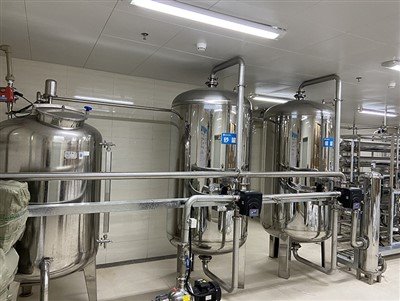
The core function of a pure water system is to provide high-purity, stable water through multiple purification technologies, meeting the stringent water quality requirements of industrial production, laboratory research, and other fields. This is specifically reflected in five dimensions: impurity removal, desalination, sterilization, and disinfection.
1. Impurity Removal
A pure water system can efficiently remove physical impurities such as suspended solids, colloids, and microorganisms from water. For example, in electronic chip manufacturing, such impurities can cause short circuits, while a pure water system can increase the yield rate of chip manufacturing to over 99%.
2. Desalination Treatment
Through reverse osmosis and ion exchange technologies, the system can reduce the salt content in water to the ppm level (parts per million). In the chemical industry, the conductivity of reaction solutions needs to be below 0.1 μS/cm; a pure water system can precisely control the salt concentration to meet the requirements of chemical reactions.
3. Microbial Control
By integrating technologies such as ultraviolet sterilization and ultrafiltration membranes, the system can achieve a sterilization rate of 99.99%. Pharmaceutical companies utilize this characteristic to ensure that the microbial content of water for injection meets the sterility standards of the Chinese Pharmacopoeia.
4. Organic Matter Removal
For organic pollutants such as humic acid and pesticide residues, the activated carbon adsorption layer of the pure water system can reduce the organic matter content to below 10 ppb. Beverage companies use this to ensure that bottled water does not produce off-flavors and maintains product taste consistency.
5. Stable Water Quality Output
Through online conductivity detection and automatic circulation rinsing, the system can maintain the output water quality fluctuation within ±1%. Laboratories rely on this characteristic to ensure that the deviation rate of blank control data in each experiment does not exceed the specified threshold.