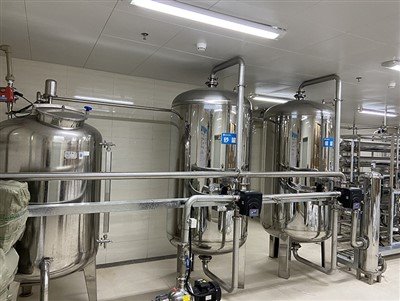
Choosing a suitable pure water system requires a comprehensive evaluation based on the specific application scenario, water quality requirements, production capacity, and raw water conditions. The following are key decision-making dimensions:
Clarify the water quality requirements for the experiment or production. Different uses correspond to different pure water grades, classified according to GB/T 6682-2008 standard:
Grade I (Ultrapure Water, 18.2 MΩ·cm): Used for high-precision analysis and life science experiments such as HPLC, LC-MS, cell culture, and PCR.
Grade II (EDI Pure Water, >5 MΩ·cm): Suitable for routine experiments such as buffer preparation, water supply for biochemical analyzers, and microbial culture.
Grade III (RO Water): Used for basic applications such as glassware cleaning, water baths, and autoclaves.
Assess the compatibility between the feed water source and pretreatment system.
The quality of the raw water directly affects the system configuration and lifespan:
Tank water as feed water: An RO reverse osmosis membrane must be used as the primary purification unit to effectively remove over 95% of ions, organic matter, and microorganisms.
Pure water/distilled water as feed water: An ultrapure water system (such as the Milli-Q® IQ 7000) can be selected, offering compact size and high efficiency.
Special feed water (high hardness, high fluoride, high chlorine): Customized pretreatment modules are required, such as softening, defluoridation, or deep activated carbon adsorption, to avoid membrane fouling and system failure.