


What is Pure Water?
Pure water is water that contains only H₂O molecules, with no dissolved salts, minerals, organic matter, microorganisms, or contaminants. In practice, water can be very close to pure, but never absolutely 100% pure outside a laboratory vacuum.
Key characteristics of pure water
-- Chemical composition: H₂O only
-- No impurities: free of ions (like Na⁺, Ca²⁺, Cl⁻), bacteria, particles, and organics
-- Electrical conductivity: extremely low (because there are almost no ions)
-- Taste: flat or bland (minerals give drinking water its taste)
Why Do We Need Pure Water?
Pure water is needed because impurities in ordinary water cause contamination, damage, and unreliable results in many critical applications.
1. To avoid contamination
Even tiny amounts of minerals, bacteria, or organic matter can:
-- Alter chemical reactions
-- Ruin laboratory test results
-- Contaminate pharmaceutical and medical products
That's why labs and drug manufacturing require highly purified water.
2. To protect equipment and systems
Minerals such as calcium and magnesium cause:
-- Scaling in boilers and heat exchangers
-- Corrosion in pipes and process equipment
-- Reduced efficiency and higher maintenance costs
Using pure or demineralized water extends equipment life.
3. To ensure product quality
In high-precision industries, water purity directly affects yield:
-- In semiconductor manufacturing, impurities can destroy microchips
-- In electronics cleaning, residues leave defects
-- In cosmetics and food, impurities affect safety and consistency
We need pure water when water is part of the process, the product, or the measurement-and any impurity could cause failure, damage, or risk.
Pure Water Filtration System - What It Is & How It Works
A Pure Water Filtration System is a water-treatment setup that removes contaminants until the water meets a high purity level suitable for industrial, laboratory, pharmaceutical, or specialty applications. These systems are designed to take regular water (tap or well water) and progressively strip out particles, dissolved solids, minerals, organics, microbes, and ions.
Core Components of a Pure Water Filtration System
A system often combines several technologies in stages:
Multi media filters
Removes large particles and sediment.
-- Sediment filters
-- Protects downstream membranes and resins
Activated Carbon Filters
Removes:
-- Chlorine / chloramines
-- Organic compounds
-- Odor and taste issues
Prevents damage to RO membranes.
Precision Filters
Removes sand or activated carbon from the front 2 filters, Prevents damage to RO membranes.
Reverse Osmosis (RO) Unit
-- Key step to remove:
-- Dissolved salts
-- Heavy metals
Most organics and microbes
Produces RO permeate (much lower TDS).
Ultrapurification (Optional)
For highest purity demands:
-- Electrodeionization (EDI)
-- Ultrafilters / sub-micron filters
-- UV sterilization (kills microbes & breaks down organics)
Polishing(Optional)
Final step ensures stability:
-- Polishing mixed bed
-- Final filters (0.2 µm or ultrafilters)
Quick Example System Flow

Choosing The Right System
To select the right pure water system, consider:
1.Feed water quality (tap, well, surface)
2.Required purity level (RO, DI, UPW)
3.Flow rate & volume needs
4.Space, budget, and maintenance plans
5.Regulations or standards you must meet
If you want, tell us:
-- Your application (lab tests, manufacturing, drinking, etc.)
-- Your feed water source and quality
-- Your volume needs
…and I'll recommend a specific system configuration and estimate expected purity levels.
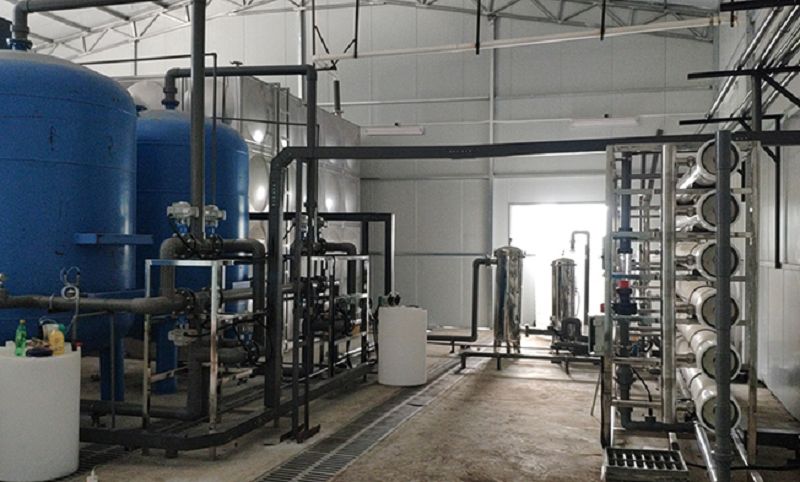
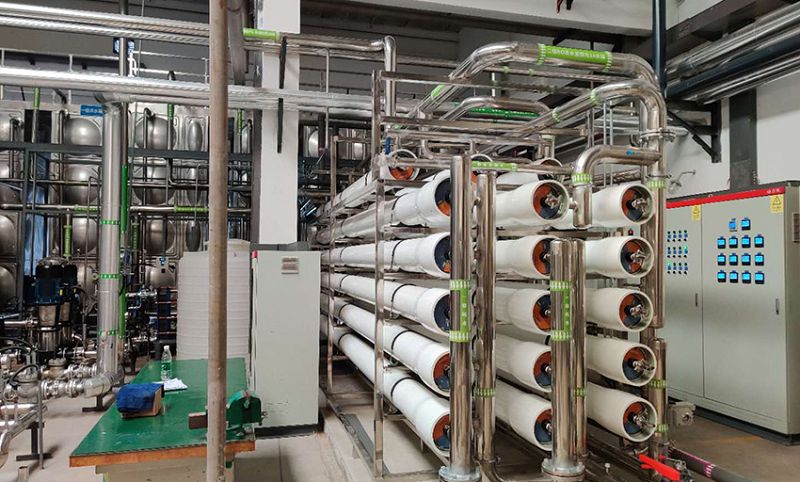
Successful Cases

Hot Tags: pure water filtration system, China pure water filtration system manufacturers, suppliers, factory, Double Pass RO System, high pressure reverse osmosis system, new reverse osmosis system, reverse osmosis water filtration system, Reverse Osmosis Water Treatment Machine For Film Coating, Water purification plant for salt water


