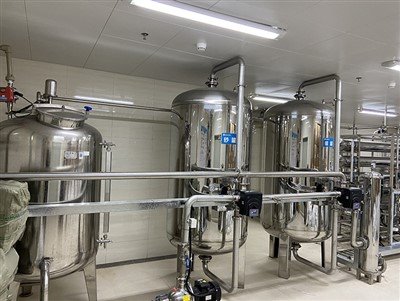
The RODI Filter System For Steam Generation is designed to produce ultrapure water for steam generation in industrial applications such as power plants, manufacturing facilities, and chemical processing plants. In steam boilers and other steam generation systems, the quality of water is critical to prevent scaling, corrosion, and deposits, which can reduce the efficiency and lifespan of the equipment. This system combines Reverse Osmosis (RO) and Deionization (DI) to provide water that meets the highest purity standards required for efficient and reliable steam production.
How To Design A Suitable Rodi Filter System For Steam Generation
Designing a Reverse Osmosis Deionization (RODI) Filter System for steam generation involves several critical steps to ensure that the water produced meets the necessary purity standards to avoid scaling, corrosion, and other issues that could reduce the efficiency and lifespan of steam generation equipment such as boilers, turbines, and heat exchangers.
Step-by-Step Guide to Designing an RODI Filter System for Steam Generation
1. Assess the Raw Water Quality
The first step in designing a suitable RODI filter system is to understand the quality of the raw water and the specific requirements of the steam generation system. The raw water characteristics will influence the pre-treatment requirements, membrane selection, and overall system design.
Key Parameters to Assess:
- Total Dissolved Solids (TDS): Measure the level of dissolved salts and minerals. Higher TDS requires a more robust treatment system.
- Hardness: High levels of calcium and magnesium can cause scaling in the boiler and other steam generation equipment.
- Silica: Silica is problematic because it can form hard deposits (scaling) in the steam system.
- Chlorine: Chlorine can damage RO membranes, so it must be removed.
- pH Level: The pH of the raw water affects the efficiency of the RO and DI systems and must be within an acceptable range (usually between 4-11).
- Microbial Contamination: If the water has a high microbial load, it must be disinfected before it enters the RO system.
- Actions to Take:
- Perform tests to measure TDS, hardness, silica, chlorine, and microbial contamination.
- Understand the daily water consumption required for steam generation to size the system properly.
2. Pre-Treatment Design
Pre-treatment is essential for protecting the RO membranes and DI resins. The goal is to remove large particles, chlorine, hardness, and other contaminants that could affect the system's performance.
Key Pre-Treatment Stages:
1.Sediment Filtration:
Function: Removes large suspended solids, dirt, and particulate matter from the water.
Equipment: Multimedia filters or sand filters.
2.Activated Carbon Filtration:
Function: Removes chlorine and organic matter that could damage the RO membranes.
Equipment: Granular activated carbon (GAC) filters.
3.Water Softening:
Function: Reduces calcium and magnesium (hardness) to prevent scale formation in RO membranes and the boiler.
Equipment: Ion-exchange softeners.
4.Antiscalant Injection:
Function: Prevents the formation of scale (from calcium, magnesium, or silica) on the RO membranes.
Equipment: Chemical dosing pump for antiscalant injection.
5.Microbial Control:
Function: Eliminates bacteria or viruses that might be present in the raw water.
Equipment: UV sterilization or chlorination (if necessary).
6.pH Adjustment:
Function: Adjusts the pH level of the water if needed for optimal RO membrane performance.
Equipment: pH control unit or chemical dosing system.
3. Reverse Osmosis (RO) System Design
The RO system is the primary treatment method that reduces the TDS and removes most salts, minerals, and contaminants.
RO System Design Considerations:
1.Membrane Selection:
Choose high-quality, high-rejection RO membranes designed to remove 95-99% of dissolved solids. Membranes should be able to handle the specific TDS levels and chemical composition of the feedwater.
2.High-Pressure Pumps:
Pressure is required to push the water through the RO membranes, typically between 4-6 bar. The pump selection should be based on the water flow rate and TDS levels.
3.Recovery Rate:
Aim for a RO recovery rate of 75-85%, meaning 75-85% of the feedwater is converted into purified water, and the rest is reject water (brine).
4.Reject Water Disposal:
Consider the disposal or reuse of the reject water. For example, it might be reused in processes that do not require ultrapure water, reducing overall water waste.
5.RO Membrane Fouling:
The RO system should be designed to minimize fouling and scaling. Regular cleaning cycles (chemical or CIP - Clean in Place) should be scheduled.
4. Deionization (DI) System Design
After the RO process, deionization (DI) is used to remove the remaining ionic impurities from the water, ensuring it is ultrapure.
DI System Design Considerations:
1.DI Resin Selection:
Choose the appropriate cation and anion exchange resins for deionization. These resins will remove any remaining positively charged ions (e.g., calcium, sodium) and negatively charged ions (e.g., chloride, sulfate).
2.Capacity:
Size the DI system to handle the flow rate of purified water from the RO system. Ensure the system can handle the total ionic load of the feedwater.
3.Electric Regeneration (Optional):
Electrodeionization (EDI) can be integrated to regenerate the DI resins without chemicals, providing an eco-friendly, chemical-free method of producing ultrapure water.
4.Resistivity Monitoring:
Use resistivity sensors to continuously monitor the water quality, ensuring that the DI system is providing ultrapure water with a resistivity of >18.2 MΩ·cm.
5. Polishing Stage (Optional)
A polishing stage can be added after the DI system to further purify the water, ensuring it meets the highest quality standards for steam generation.
Polishing Stage Components:
1.Mixed-Bed Ion-Exchange:
After DI, mixed-bed resin filters are used to polish the water and remove any remaining trace contaminants.
2.UV Sterilization:
If microbial contamination is a concern, a UV sterilizer can be added for final microbial control.
3.Sub-Micron Filtration:
Use sub-micron filters (e.g., 0.2 microns) to remove fine particulates and ensure that the water is free from any contaminants.
6. Water Quality Monitoring and Automation
Continuous monitoring and control are essential for ensuring that the water produced meets the necessary quality standards for steam generation.
Key Monitoring Parameters:
1.Resistivity: Maintain resistivity >18.2 MΩ·cm to ensure ultrapure water.
2.TDS: Ensure TDS levels remain low, typically <10-20 ppm.
3.Silica: Keep silica levels <0.05 ppm to prevent scaling in the steam generation system.
4.TOC (Total Organic Carbon): Maintain TOC levels <10 ppb for optimal water purity.
Control System:
PLC (Programmable Logic Controller): Integrate a PLC system to automate the entire RODI system. The PLC will control water flow, monitor key parameters, and adjust system operations to optimize water quality and minimize maintenance.
7. Wastewater Management
The reject water from the RO and DI systems should be managed properly:
- Wastewater Disposal: Discharge the reject water according to environmental regulations, or reuse it in non-critical processes such as cooling or washing.
- Water Recovery: The system should be designed for high recovery rates to minimize water waste, making the system more sustainable.
8. System Integration and Automation
Ensure that the entire system is integrated with automated cleaning cycles, monitoring, and controls to ensure seamless operation.
- Automated Cleaning: Schedule periodic membrane cleaning (chemical or CIP) to maintain RO membrane performance.
- Data Logging: Record key metrics such as resistivity, TDS, flow rates, and system performance for long-term analysis and optimization.
Conclusion
Designing a RODI system for steam generation involves understanding raw water quality, selecting appropriate pre-treatment methods, designing an efficient RO system to reduce TDS, and following up with deionization (with optional EDI) for ultrapure water production. The system should ensure that the produced water is of the highest quality, free from contaminants that could compromise boiler efficiency, turbine performance, and overall steam generation. By incorporating monitoring, automation, and wastewater management, the system can operate efficiently, sustainably, and cost-effectively.
Successful Cases


Our Service
a.We provide full technical support and after equipment installation.
b.We help to train operator of the system. And detailed operating manual is provided.
c.7*24 hours phone assistance on technical support.
d.We provide consumable and spare parts in the long-term for cost price.
Hot Tags: rodi filter system for steam generation, China rodi filter system for steam generation manufacturers, suppliers, factory, di pure water machine, di pure water system, Reverse Osmosis Deionized Water System, ro deionization equipment, ro di water filtration equipment, ro di water filtration plant