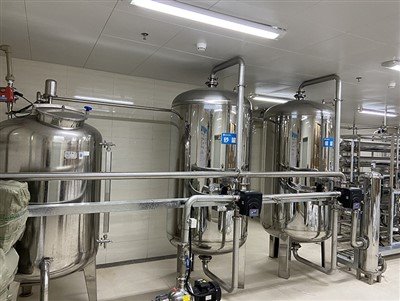
A Reverse Osmosis water treatment system for metal plating is used to make low-salt, low-hardness, low-microbial water for plating bath make-up, rinsing, and final DI rinse. In plating, water quality directly affects deposit quality (brightness, adhesion, pitting, stains) and bath stability.
Where Ro Water Is Used In Metal Plating
- Process rinses after degreasing/pickling/plating/passivation
- Bath make-up / bath top-up (controls impurities)
- Final rinse (often needs DI after RO for spot-free finish)
- Scrubber / utilities (less strict)
Typical Reverse Osmosis Water Treatment System For Metal Plating
Recommended: Pretreatment + RO + Polishing (DI/EDI)
Raw water
→ Raw water tank + dosing
→ Multi Media Filter (MMF)
→ Activated Carbon Filter (ACF) (removes chlorine/organics)
→ Softener (if hardness high) or antiscalant dosing
→ Cartridge filter (5 micron)
→ RO
→ Permeate tank
→EDI (for final rinse & bath make-up)
→ Distribution to plating line
If your raw water is already good (low TDS)
You may use RO only for general rinses, and DI only for final rinse.
Typical Water Quality Targets (practical Guidance)
Exact values depend on plating chemistry (Zn/Ni/Cr/Cu, anodizing, etc.), but common targets are:
For general rinsing (RO permeate)
TDS: often < 100–300 ppm
Hardness: near zero
Turbidity: < 1 NTU
For bath make-up & final rinse (after DI/EDI)
Conductivity: commonly < 10–30 µS/cm (sometimes lower)
Hardness: nil
Low silica / metals
Key Design Points For Plating Applications
- Chlorine removal is critical (RO membranes get damaged by chlorine) → ACF or SMBS dosing
- Scaling control (hardness/sulfate/silica) → softener + antiscalant + correct recovery %
- Corrosion-resistant materials (UPVC/PP/FRP/SS316 where required)
- CIP (clean-in-place) system for membrane cleaning
- Storage & distribution loop designed to avoid contamination and ensure stable pressure/flow
Capacity Sizing (rule-of-thumb)
RO capacity depends on rinse demand + bath make-up + losses. Typical ranges:
- Small shop: 0.5–2 m³/hr
- Medium unit: 3–10 m³/hr
- Large line: 10–50+ m³/hr
Also plan for:
- RO recovery (BWRO: ~65–80%, SWRO: ~35–50%)
- Peak demand factor + standby train if downtime is costly
If you tell me these 4 things, I can suggest the suitable Reverse Osmosis Water Treatment System For Metal Plating:
Raw water source + TDS
Required flow (LPH / m³/hr)
Plating type (Zn/Ni/Cr/Cu/anodizing)
Use split: rinsing vs final EDI rinse vs bath make-up
Guarantee, Technical Support and Failure Claim Procedures
Guarantee
a.All systems delivered to customers are carefully examined and pipe tested.
b.All systems enjoy 12 MONTHS warranty ever since B/L date.
Technical support
a.We provide full technical support and after equipment installation.
b.We help to train operator of the system. And detailed operating manual is provided.
c.7*24 hours phone assistance on technical support.
d.We provide consumable and spare parts in the long-term for cost price.
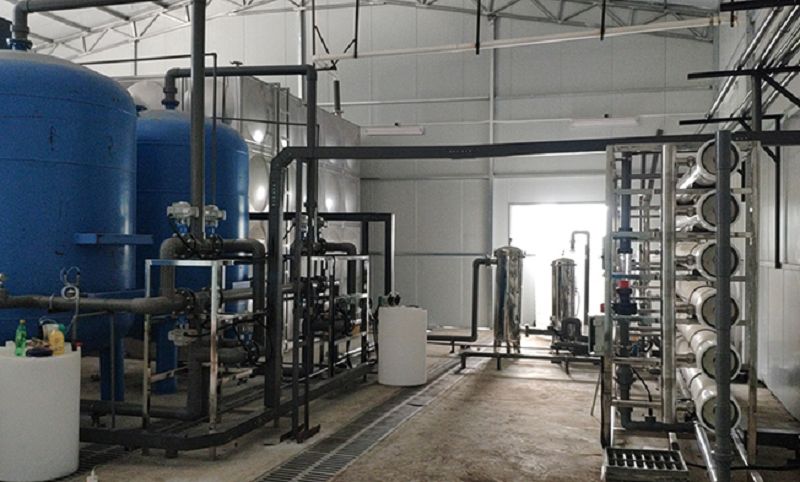
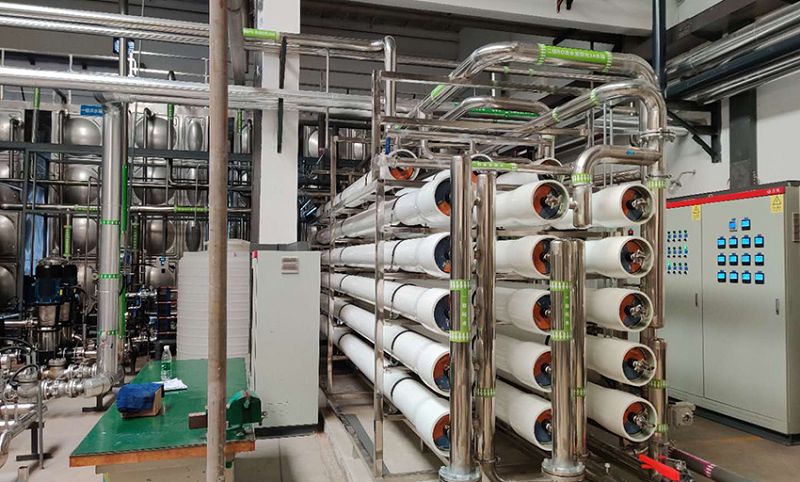
Successful Cases

Hot Tags: reverse osmosis water treatment system for metal plating, China reverse osmosis water treatment system for metal plating manufacturers, suppliers, factory, commercial reverse osmosis water filtration system, industrial dm water plant, industrial reverse osmosis water fillter system, pure water treatment machine, reverse osmosis water filtration system, saline water purification system